Sunday, March 14, 2010
Performance Royalty Act Still In Jeopardy
Dion Warwick appeared on capital hill on Tuesday to urge legislators to support the Performance Royalty Act.
"I'm sure you all thought that I walked on by with my little check in hand," Warwick said in a reference to her popular tune "Walk on By." "I wish I had, but all I did was walk on by."
http://abcnews.go.com/Entertainment/wireStory?id=9989979
Senator Conyers had a good take on the measure supporting peforming musicians, who currently get paid nothing for performing their music on broadcast radio:
"They work and they don't get paid," Conyers said after the event. "That's involuntary servitude. They don't even get any choice of whether they want to work or not — they just take their work product."
The event was sponsored by the Music First coalition. Please check out their website, here.
For a better perspective on this issue, view this video: http://www.youtube.com/watch?v=k5WWzD8Jycg
Incidently, you will not hear this view or perspective on a broadcast radio station.
T


Tuesday, January 19, 2010
Finding The Way Home. (Writing for a Specific Project)

In mid-December, I was contacted by one of my favorite publishers in Nashville looking for material for an upcoming gospel project. The artist is a once-well-known recording artist. This artist had had huge successes back in the early 70’s and had been recording ever since. All in all, over 50 albums.
I set out to learn about the artist. Google is wonderful. From the articles and interviews I found, I learned that the artist had a love for horses. I read about the artists’ family and their history. I learned of recent projects and the genres they were targeted towards.
I googled photos of the artist and saw several album covers, promo shots, etc. I submitted a song that was not so much gospel as a song that spoke of a person of faith. It was forwarded and I pretty much forgot about the pitch for a few days.
Then a writer I work with, Jim Evans, sent me an email. I had mentioned the pitch to him and he had an idea for a song. What he sent me struck a chord and I went to work. The premise of Jim’s lyric was a classic theme, one that painted many pictures. I took that and what I had learned about the artists’ passions, family, and struggles and tried to paint a song about tradition, values, and redemption. I tried to write a lyric that would strike a chord with the artist, and yet be a song that could be universally understood.
I started with a classic gospel feel, but quickly reverted back to a hymn form. In fact, I originally had written a soaring bridge, but decided the hymn form made it feel as if it could have been written a century ago.
When it was ready to see the light of day, but I put down a piano track, sent it to my publisher. He brought in a Nashville fiddle player and sang the vocal.
Hope you enjoy it.
You can hear it here.
Friday, December 4, 2009
Fine Line Between Ripe and Rotten

I bit into a banana this morning and realized it was still a bit green. Not bad, really, but not very sweet. It wasn’t quite done ripening. It got me to thinking. When does ripening cross over to rotting?
Isn’t it interesting that the same process that does the ripening, without the harvest (or consumption), will eventually turn the fruit into mush.
I’m a firm (haha) believer that we as created beings cannot create anything, only take creation and rearrange it. Like the old joke about the scientist telling God he can create life, and then reaching for a pile of dirt to begin, God stops him and says, “Hey, make your own dirt”.
As a result, I see things like writing and melody creation as a series of puzzles with different pieces. We’ve got letters, and words, and notes and chords and ideas. We don’t create rhymes and emotional moments, we assemble them from our tool kit and inventories of old. Ideas aren’t created, they’re discovered. Melodies aren’t spun, they’re deciphered. Add the Holy Spirit and only then, true synergy happens. Something greater than the sum of the puzzle pieces.
I reminisce, fondly, of my green banana plucked from its ultimate potential, so early in life, only to become a poor-man’s brunch. I see another one ripening on the counter, and if protected from my a-peeling hands, one day it might be arbitrarily referred to as a rotten banana.
When will be at its optimum sweetness and firmness? One day it might be at the perfect state where it as sweet as it can be, and still firm enough to eat without triggering a repulsive reaction. Too early, and we’re cheated of the ultimate flavor; The design standard! Too late, and were deprived altogether.
I can’t help but assume that there’s a word picture there. Another clue to this never ending puzzle we call life.
Or... its just a banana.
Tuesday, December 1, 2009
Faith vs. Reason for the Songwriter
In a recent facebook debate, Chuck Cannon asked the question, “Does God Have free will?” This sparked an ongoing debate which quickly turned to the question, “Does God exist?”, etc.
Then the question of faith vs. reason. I always think its strange that the two are sometimes presented as polar opposites.
Here is part of Chuck’s response that seem applicable to songwriting:
Chuck Cannon commented on his status:
I am a songwriter.
I have no idea what I am going to write next. I can be in the middle of a song and have no idea what the next line is going to be. I have no way of "knowing" if the lines I write are the right ones.
But I have "faith" that I can write songs. That faith has been supported by "reason" ... I have actually made money writing songs and have had people (besides friends and family) tell me my songs are good.
But the only way I will ever write another one is to have faith that I can ...
If I just sit on my ass and have "faith" nothing will happen. (Yes, I have empirical evidence!) So I spend an enormous amount of time reading ... looking for ideas. I write off movie tickets because I find so many ideas there ... I listen to people and how they say things ... what they love ... who they love ... what they believe ...
But once I'm in the middle of a song, "reason" plays a huge role ... I analyze ... I use dictionaries, a thesaurus, quotation books ... my old harmony textbooks for musical ideas ... different instruments ... different co-writers ...
poets and mathematicians ...
they are both at work in my brain ...
so faith and reason feed on each other in my world all the time ... i bet in your world too ...
and tomorrow I can get up and crank my tractor and move some gravel around on my driveway or I can stay right here in my studio and see if a song shows up ...
fate has brought me to this moment of choice ...
and my choices have brought me to this fate ...
Peace ~ Chuck"
Then the question of faith vs. reason. I always think its strange that the two are sometimes presented as polar opposites.
Here is part of Chuck’s response that seem applicable to songwriting:
Chuck Cannon commented on his status:
I am a songwriter.
I have no idea what I am going to write next. I can be in the middle of a song and have no idea what the next line is going to be. I have no way of "knowing" if the lines I write are the right ones.
But I have "faith" that I can write songs. That faith has been supported by "reason" ... I have actually made money writing songs and have had people (besides friends and family) tell me my songs are good.
But the only way I will ever write another one is to have faith that I can ...
If I just sit on my ass and have "faith" nothing will happen. (Yes, I have empirical evidence!) So I spend an enormous amount of time reading ... looking for ideas. I write off movie tickets because I find so many ideas there ... I listen to people and how they say things ... what they love ... who they love ... what they believe ...
But once I'm in the middle of a song, "reason" plays a huge role ... I analyze ... I use dictionaries, a thesaurus, quotation books ... my old harmony textbooks for musical ideas ... different instruments ... different co-writers ...
poets and mathematicians ...
they are both at work in my brain ...
so faith and reason feed on each other in my world all the time ... i bet in your world too ...
and tomorrow I can get up and crank my tractor and move some gravel around on my driveway or I can stay right here in my studio and see if a song shows up ...
fate has brought me to this moment of choice ...
and my choices have brought me to this fate ...
Peace ~ Chuck"
Wednesday, November 18, 2009
Performance Royalties for Performers on Radio
The proposed measure in the Senate calls for a performance royalty to be paid to the artists for airplay.
Whether you know it or not, artists are currently not compensated for terrestrial radio airplay of their music. Writers and publishers are compensated, but the owners of the recordings are not.
To my knowledge, the royalty is 1/2 cent per play, to be added to the current royalty to then be distributed to the artists.
The NAB response is that local radio stations can not afford such an increase, and would have to suspend local news coverage, weather and all kinds of other services just to pay these (inferred greedy) artists for the use of their music. They even created the phrase PERFORMANCE TAX to gather public opinion against it.
Well, lets do some math.
If a radio station plays 15 songs an hour (I challenge you to find one that plays that many), 168 hours a week, 4.3 weeks a month.. or 10,836 songs a month.
10,836 songs a month! That’s a lot of songs.. That sounds like a lot of money, right?
At 1/2 cent each... the bill comes to $54.18 a month.
If an artist’s music helps to generate an audience... which sells advertising... which pays the bills, don’t you think that artist should get a penny every couple times his song gets played?
If there’s a better and cheaper way for a station to generate listeners, I say they should go for it. Music sounds like a bargain, to me.
Seriously. How much bad news do we have to give up for 55 bucks a month?
Whether you know it or not, artists are currently not compensated for terrestrial radio airplay of their music. Writers and publishers are compensated, but the owners of the recordings are not.
To my knowledge, the royalty is 1/2 cent per play, to be added to the current royalty to then be distributed to the artists.
The NAB response is that local radio stations can not afford such an increase, and would have to suspend local news coverage, weather and all kinds of other services just to pay these (inferred greedy) artists for the use of their music. They even created the phrase PERFORMANCE TAX to gather public opinion against it.
Well, lets do some math.
If a radio station plays 15 songs an hour (I challenge you to find one that plays that many), 168 hours a week, 4.3 weeks a month.. or 10,836 songs a month.
10,836 songs a month! That’s a lot of songs.. That sounds like a lot of money, right?
At 1/2 cent each... the bill comes to $54.18 a month.
If an artist’s music helps to generate an audience... which sells advertising... which pays the bills, don’t you think that artist should get a penny every couple times his song gets played?
If there’s a better and cheaper way for a station to generate listeners, I say they should go for it. Music sounds like a bargain, to me.
Seriously. How much bad news do we have to give up for 55 bucks a month?
Thursday, November 5, 2009
Took It For Granted
I’ve been waking up multiple times during the night. (and its not because I drank too much water before bed)
I’ve been waking up with lines and couplets. Ideas and rhymes. A few nights ago I woke up and thought, that’s a great idea. I’ll remember that. I didn’t even need to get up and write it down, it was that good. Good thing, because I was at a hotel and I didn’t have my notepad next to me..
I forgot the idea by the time I woke up again.
Try as I might, I’m still lamenting the loss of that idea. Moleskin is back in place. Recorder is at the ready. Its been awhile since the thoughts bubbled. Now they boil at times.
I’m thankful they’re back and I will try to be prepared. Hit me, Lord. Hit me!
I’ve been waking up with lines and couplets. Ideas and rhymes. A few nights ago I woke up and thought, that’s a great idea. I’ll remember that. I didn’t even need to get up and write it down, it was that good. Good thing, because I was at a hotel and I didn’t have my notepad next to me..
I forgot the idea by the time I woke up again.
Try as I might, I’m still lamenting the loss of that idea. Moleskin is back in place. Recorder is at the ready. Its been awhile since the thoughts bubbled. Now they boil at times.
I’m thankful they’re back and I will try to be prepared. Hit me, Lord. Hit me!
Tuesday, August 18, 2009
WANTED. Up-tempo Radio-Ready Drivel.

I was reading a posting over at Ninety Mile Wind on the current state of the country music market that prompted the following response:
The current parade of country drivel on terrestrial radio is perceived to be what the customer wants, and in some respects, it IS what the customer wants, or at least what they are willing to settle-for to get where they want to be. They play it, and people listen. (or at least advertisers think so)
Artists and writers can't stand most of it, of course, but the market exists, and it comes with formulaic risk that is easily exploited by the accountants and execs.
Pop culture will always exist, and it will rarely be pretty, and will almost always be laughable and/or forgotten in hindsight, but as long as people will put up with them, 30 second hits are not going away.
There will always be someone willing to whip up what the customer will consume.
I'm reminded of a quote from Henry Ford. When asked about giving the customers what they want, he replied, "If I had asked people what they wanted, they would have said 'Faster Horses'.
People and labels may think they want more drivel (uptempo horses), but what people really want is a way to extract themselves from reality and for that, the current drivel and vacuum-packed productions deliver! Even we, as artists, have to admit we’re distracted from reality as we contemplate how such a mindless song ever made it to the airwaves.
Unless presented with a different destination and a compelling vehicle to get them there, the consumer will continue to shovel all the hay and manure the label’s hit-farms have to offer.
Songwriters. You were made for a higher purpose.
©2009 Tim Wheeler
Friday, August 7, 2009
A friend of mine sent me a link to unique perspective on Artists vs. Broadcaster debate over the Performance Rights Act.
Cathy Hughes Attacks John Conyers for His Support of Performance Rights Act

Another valuable perspective. Check out who else she’s attacking.
It occurs to me that it is an outright battle just to find the other side of this story. The general public only hears about the PERFORMANCE “TAX” fight, which in itself is a blatant misrepresentation. (The Government will not be involved in the payment system for the peformer’s royalties... no tax collected) The reason is that the media outlets that can spread the news are biased on the issue.
The only reason I even questioned the first news I heard on this was because of a funny feeling in my gut. I had to do some serious digging to get another perspective.
Always Follow the money.
Cathy Hughes Attacks John Conyers for His Support of Performance Rights Act
Another valuable perspective. Check out who else she’s attacking.
It occurs to me that it is an outright battle just to find the other side of this story. The general public only hears about the PERFORMANCE “TAX” fight, which in itself is a blatant misrepresentation. (The Government will not be involved in the payment system for the peformer’s royalties... no tax collected) The reason is that the media outlets that can spread the news are biased on the issue.
The only reason I even questioned the first news I heard on this was because of a funny feeling in my gut. I had to do some serious digging to get another perspective.
Always Follow the money.
Friday, June 26, 2009
The King Is Dead.

Michael Jackson was an Icon with a capital ‘i’. He took his work seriously and never produced a sub-par piece of work. Whether you like his style, or not, you cannot deny his consistent level of excellence. I remember waiting to watch a new video or listen to a new song when he would be working. My expectation was that it was always top shelf. I don’t remember being disappointed.
His personal life, of course, was a freak-show. There was a sweet innocence about his demeanor. Personally, I prefer not to think he was perverted, that he was trying to go back to another time when everyone wasn’t suspect. I may be wrong, but I prefer not to have to rectify that type of perversion with the art and message that his art portrayed. Some know the truth, but in this day and age you don’t know who’s telling the truth.
It was obvious he was trying to fill a bottomless hole. His plastic surgery, skin color, Neverland. Deep down, I think he was longing for acceptance. Perhaps, from his father. Perhaps from his fans. Perhaps from the press. Perhaps from himself.
Surely he got glimpses of it when each of his projects were released... Thriller had no critics... but I sense it was never enough.
I cranked up BLACK OR WHITE last night. I love that song.. mostly I love the performance. There is so much energy in that performance and so many other MJ creations.
I never idolized Michael Jackson, but I bought his stuff. It was always worth the money. I did my part to contribute to his acceptance, but I’m only human, and in the end, its not the acceptance of other humans that ultimately fulfills.
“If you’re wantin’ to be my brother it don’t matter if you’re black or white.”
Monday, June 8, 2009
Performance "Tax" on Broadcast Radio. VOTE YES! Here's why...
There’s a fire storm raging about the new performance “tax” that is being presented to Congress.
Now, I’m the first to bristle at new taxes, but I got a bad feeling in my stomach when it was the radio stations and NAB pushing to stop it in its tracks. Keep in mind that it was the broadcasters who formed BMI to limit performance royalties paid out to composers and songwriters... (competing with ASCAP) I kept hearing things like greedy record labels.. so I looked into it.
First off, the word TAX... the broadcasters came up with that.. there is no mention of the word in the bill.
Seems that performers are not paid performance royalties in the US. Writers and publishers are, and have been since 1909 or some such year.. but for 80 years, performers are not and have not been paid. The excuse the broadcasters have used for years is the music business is paid via sales as a result of radio air play. Of course, with the advent of illegal downloads, most of that revenue is gone. Additionally, as the major labels dominance continues to wane, smaller labels get more airplay, but continue to get no compensation.
NAB is arguing that it will cause less music to be played on the radio. Like there’s a lot now? Demand will dictate how much music is played on the radio, and having to pay another 1/2 cent royalty to the performer is not going to eliminate profit for the broadcasters.
Music is the reason people listen. Artists should be compensated for their work.
Furthermore, as most are unaware, there are millions collected world wide for US artists on foreign stations, but because the US does not pay, those royalties are not distributed to US artists. That would open those funds up for artists as well.
Get on your horn. Let your congressman know that we want artists to be paid, just like publishers and writers are paid.
Remember, the Big labels.. well when their gone, its just us small labels and musicians left.. and how are we going to change the laws, then?
So, unless you’re not for artist getting paid for performing their works, you should be FOR this bill, not against it.
The House Bill in question is H.R. 848. Check into it, and spread the word. Call your Representative.
Now, I’m the first to bristle at new taxes, but I got a bad feeling in my stomach when it was the radio stations and NAB pushing to stop it in its tracks. Keep in mind that it was the broadcasters who formed BMI to limit performance royalties paid out to composers and songwriters... (competing with ASCAP) I kept hearing things like greedy record labels.. so I looked into it.
First off, the word TAX... the broadcasters came up with that.. there is no mention of the word in the bill.
Seems that performers are not paid performance royalties in the US. Writers and publishers are, and have been since 1909 or some such year.. but for 80 years, performers are not and have not been paid. The excuse the broadcasters have used for years is the music business is paid via sales as a result of radio air play. Of course, with the advent of illegal downloads, most of that revenue is gone. Additionally, as the major labels dominance continues to wane, smaller labels get more airplay, but continue to get no compensation.
NAB is arguing that it will cause less music to be played on the radio. Like there’s a lot now? Demand will dictate how much music is played on the radio, and having to pay another 1/2 cent royalty to the performer is not going to eliminate profit for the broadcasters.
Music is the reason people listen. Artists should be compensated for their work.
Furthermore, as most are unaware, there are millions collected world wide for US artists on foreign stations, but because the US does not pay, those royalties are not distributed to US artists. That would open those funds up for artists as well.
Get on your horn. Let your congressman know that we want artists to be paid, just like publishers and writers are paid.
Remember, the Big labels.. well when their gone, its just us small labels and musicians left.. and how are we going to change the laws, then?
So, unless you’re not for artist getting paid for performing their works, you should be FOR this bill, not against it.
The House Bill in question is H.R. 848. Check into it, and spread the word. Call your Representative.
Monday, March 23, 2009
Great Songs Will Prevail!
Great songs will prevail and open doors.
However, I think there's an ongoing, basic misunderstanding on who the audience is for a demo. I believe this, because I misunderstood it for years. (Not to mention tens-of-thousands-of-dollars in demos)
There’s a lot of talk about those who can’t hear a song in the raw form. Fact is, there’s a lot of people who can’t, but that’s not the point. The real question is this; Where, in the music business food chain, are you presenting your work? This will determine the level of quality you at which you need your demos recorded.
For instance, if you want to pitch to major artists and labels, you had better walk in with the full guns blazing (master quality demos). It takes time or providence even to get the chance to compete in this arena. Once you've gotten that chance, you have to present relevant and excellent work everytime, or your chance to even have an audience to listen in the future will wane quickly.
When pitching to major labels, you're in the lineup with the best of the best and rest assured, they are putting their best foot forward. The assumption will be that you, too, are submitting the best you can produce. That's a tough, (and expensive) field in which to play. The silk-purse-from-a-sow's-ear illustration applies, big time. If your song isn't ready, no amount of production is going to make it a hit... and the very act of presenting it may ruin your chances (credibility) to be in the first string of presenters in the future.
If we represent our wares in that field, you are in a real sense making yourself the publisher, and the investment of time and resources need to be commensurate with those you’re competing with. The list of great competitors cannot be adequately listed here... its huge.
If you’re presenting your songs to publishers, however, the game should be very different. I say “should”, because it doesn’t take much to “call” yourself a publisher. To make that point short, lets just say that if you sense a publisher can’t “hear” a song in raw form, move on. Find one who can.
As a writer, establish relationships with those who are connected in the industry, and can HEAR a song, through the rough as well as the polished demos. As with everything, there are those can be trusted, and those who can't. Those who are looking to make money from the bottom up (from writers), and those who want to make money the real, legit way (from hit songs) When you find the latter, however, and develop a relationship and trust with them, the game changes in your favor.
You still need to be great at what you do. You still need to be an excellent craftsman. You still need great ideas and the skills to change those ideas into great melodies, hooks that tie those ideas together, etc. But now you have the freedom to do that without spending good money on mediocre/half-developed ideas. That trusting relationship has the potential to give you a perspective you rarely get on your own. A second eye that can see the forest for the trees when you’ve been banging out the same notes and words to the point of insanity. The trusting voice who says “Hey, you said the same thing in Verse 2, that you already said in verse 1”, or, “that’s been said before, but much better than what you’ve written here”. A tough voice of truth that you can trust.
Developing relationships is one of the keys in this business, and I'm not talking about the old its-all-in-who-you-know-good-old-boys-network cliche'. I'm talking about publishers or pluggers who believe in your ability to write and/or those who want to develop you into a great writer. There are few of them still out there. You may have to present some material in "finished" form to open those doors, but once open, those relationships will allow you to grow without spending your life-savings in the process.
The long story short, when you get the idea of all ideas, for the song of all songs, it may be too late to develop the relationships that will get that song heard by the right people, in a timely basis (while the song is still relevant). Develop the relationships now, without ulterior motives. Develop them without the intention of making the best song in your catalog a hit. Go in with the frame-of-mind that thinks that the best song you can write hasn’t been written yet, so when you do write it, you’ve already established the relationships with the right people who are ready to listen.
Yes. Great songs will prevail and open doors. But they have a much better chance if the doors have already been opened and you can just walk through.
TC
However, I think there's an ongoing, basic misunderstanding on who the audience is for a demo. I believe this, because I misunderstood it for years. (Not to mention tens-of-thousands-of-dollars in demos)
There’s a lot of talk about those who can’t hear a song in the raw form. Fact is, there’s a lot of people who can’t, but that’s not the point. The real question is this; Where, in the music business food chain, are you presenting your work? This will determine the level of quality you at which you need your demos recorded.
For instance, if you want to pitch to major artists and labels, you had better walk in with the full guns blazing (master quality demos). It takes time or providence even to get the chance to compete in this arena. Once you've gotten that chance, you have to present relevant and excellent work everytime, or your chance to even have an audience to listen in the future will wane quickly.
When pitching to major labels, you're in the lineup with the best of the best and rest assured, they are putting their best foot forward. The assumption will be that you, too, are submitting the best you can produce. That's a tough, (and expensive) field in which to play. The silk-purse-from-a-sow's-ear illustration applies, big time. If your song isn't ready, no amount of production is going to make it a hit... and the very act of presenting it may ruin your chances (credibility) to be in the first string of presenters in the future.
If we represent our wares in that field, you are in a real sense making yourself the publisher, and the investment of time and resources need to be commensurate with those you’re competing with. The list of great competitors cannot be adequately listed here... its huge.
If you’re presenting your songs to publishers, however, the game should be very different. I say “should”, because it doesn’t take much to “call” yourself a publisher. To make that point short, lets just say that if you sense a publisher can’t “hear” a song in raw form, move on. Find one who can.
As a writer, establish relationships with those who are connected in the industry, and can HEAR a song, through the rough as well as the polished demos. As with everything, there are those can be trusted, and those who can't. Those who are looking to make money from the bottom up (from writers), and those who want to make money the real, legit way (from hit songs) When you find the latter, however, and develop a relationship and trust with them, the game changes in your favor.
You still need to be great at what you do. You still need to be an excellent craftsman. You still need great ideas and the skills to change those ideas into great melodies, hooks that tie those ideas together, etc. But now you have the freedom to do that without spending good money on mediocre/half-developed ideas. That trusting relationship has the potential to give you a perspective you rarely get on your own. A second eye that can see the forest for the trees when you’ve been banging out the same notes and words to the point of insanity. The trusting voice who says “Hey, you said the same thing in Verse 2, that you already said in verse 1”, or, “that’s been said before, but much better than what you’ve written here”. A tough voice of truth that you can trust.
Developing relationships is one of the keys in this business, and I'm not talking about the old its-all-in-who-you-know-good-old-boys-network cliche'. I'm talking about publishers or pluggers who believe in your ability to write and/or those who want to develop you into a great writer. There are few of them still out there. You may have to present some material in "finished" form to open those doors, but once open, those relationships will allow you to grow without spending your life-savings in the process.
The long story short, when you get the idea of all ideas, for the song of all songs, it may be too late to develop the relationships that will get that song heard by the right people, in a timely basis (while the song is still relevant). Develop the relationships now, without ulterior motives. Develop them without the intention of making the best song in your catalog a hit. Go in with the frame-of-mind that thinks that the best song you can write hasn’t been written yet, so when you do write it, you’ve already established the relationships with the right people who are ready to listen.
Yes. Great songs will prevail and open doors. But they have a much better chance if the doors have already been opened and you can just walk through.
TC
Friday, November 7, 2008
Got an iPhone? This might be the reason buy one.
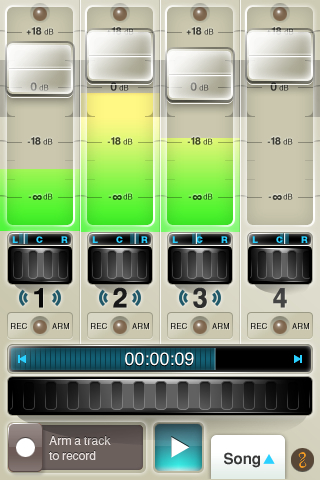
New to the iPhone is Fourtrack, a multitrack recorder of the iPhone. At $10 its a pretty good deal. It creates multiple mono 44.1k audio files and has a slick wireless app to sync each of the audio tracks to the desktop, where they can be used in standard DAW applications. This is a slick easy way for songwriters and musicians to easily capture ideas.
Reminiscent of the old portastudio cassette recorders, the Fourtrack is considerably easier to use, and fits in your pocket.
Check it out. Well worth the investment!
Sunday, July 27, 2008
Do You Write or Perform Songs?

If you’re a songwriter, or if your an artist who is looking for great songs to sing, check out Songnation.com
SongNation™ is dedicated to the promotion of Songs and Songwriters.
In their words:
“Music Publishers, Songwriters, Independent Song Pluggers and Authorized Representatives can all take advantage of our system to upload songs. In addition, Pro and VIP accounts have the ability to "Password Protect" songs so that only the people they choose can view their material. Record Companies, Recording Artists, Music Managers, Advertising Agencies, TV and Film Professionals and Others can search our system to find the perfect song for your project.”
Its a fairly new site, but it is beginning to grow. So if you’re a songwriter, you can get in on the new phenomenon. If you’re an artist looking for the right song to showcase your talent, check it out, and keep an eye on it as it grows and attracts new writers.
TuneCarver Music
SongNation™ is dedicated to the promotion of Songs and Songwriters.
In their words:
“Music Publishers, Songwriters, Independent Song Pluggers and Authorized Representatives can all take advantage of our system to upload songs. In addition, Pro and VIP accounts have the ability to "Password Protect" songs so that only the people they choose can view their material. Record Companies, Recording Artists, Music Managers, Advertising Agencies, TV and Film Professionals and Others can search our system to find the perfect song for your project.”
Its a fairly new site, but it is beginning to grow. So if you’re a songwriter, you can get in on the new phenomenon. If you’re an artist looking for the right song to showcase your talent, check it out, and keep an eye on it as it grows and attracts new writers.
TuneCarver Music
Monday, July 7, 2008
So. What's A Songwriter To Do?
I started writing songs when I was 13. Learned to play piano for real in the 10th and 11th grade. Played in bands through high school, college and single life. Kept writing and recording. Got married and lost the band gig. Kept writing. Raised kids, kept writing, even for them for awhile. Started writing professionally. Studied the model. Write. Cowrite. Get a publishing deal. Get cuts. Get airplay. Make boat-loads of money. Retire.
Side stories: Napster, mp3 format, broadband, Clear Channel, Record companies alienate (and criminalize) consumers, Major record company model collapses. Goodbye publisher-paid demo. Hello songwriter-paid demo. Hits don’t pay writers $500K anymore... or at least few and far between.
Bands aren’t discovered anymore. They have to build an audience, and then they can bargain for a deal. Trouble is, the deal they’re bargaining for isn’t such a deal anymore. CD sales are going away and the only way to monetize track sales is online.. which the record companies still haven’t figured out.
So where’s the future? Who the heck knows. If the rate of change continues, the industry will look completely different in 2 years, and then again in a year and a half. NSAI is battling in Washington for songwriter rights, and the record companies are battling for theirs at the expense of the artist and the songwriter.
The model has changed and will continue to change. Music sales may never come back to the levels they were, and because of that the major labels may lose their hold on monopoly and distribution (if they haven’t already).
On the bright side, the promotional playing field is leveling. Satellite radio is broadening the venues to hear cool stuff. Indie musicians seem to be making a living, better than before this all came down. Big stars, not so much. Sure, there’s Coldplay, but they could probably do what they did on the latest release without a label, next time.
So what’s a songwriter to do?
Let’s see... Figure out what’s next? Lobby Washington or champion those that do? Worry? Find cheaper demo studios and/or get more efficient at producing them? Network. (trying to replace all the people we knew who’ve left the industry)
I don’t think so. Sure we may need to spend some times in those areas. For some of us, more than others. For some none at all.
Some of these things might be good. Some of these things might give you an edge. Get you in the door. Break through the noise. Grease the palms.
But all of these things add up to squat, if you aint got at least one thing....
Great songs.
Write on.
Side stories: Napster, mp3 format, broadband, Clear Channel, Record companies alienate (and criminalize) consumers, Major record company model collapses. Goodbye publisher-paid demo. Hello songwriter-paid demo. Hits don’t pay writers $500K anymore... or at least few and far between.
Bands aren’t discovered anymore. They have to build an audience, and then they can bargain for a deal. Trouble is, the deal they’re bargaining for isn’t such a deal anymore. CD sales are going away and the only way to monetize track sales is online.. which the record companies still haven’t figured out.
So where’s the future? Who the heck knows. If the rate of change continues, the industry will look completely different in 2 years, and then again in a year and a half. NSAI is battling in Washington for songwriter rights, and the record companies are battling for theirs at the expense of the artist and the songwriter.
The model has changed and will continue to change. Music sales may never come back to the levels they were, and because of that the major labels may lose their hold on monopoly and distribution (if they haven’t already).
On the bright side, the promotional playing field is leveling. Satellite radio is broadening the venues to hear cool stuff. Indie musicians seem to be making a living, better than before this all came down. Big stars, not so much. Sure, there’s Coldplay, but they could probably do what they did on the latest release without a label, next time.
So what’s a songwriter to do?
Let’s see... Figure out what’s next? Lobby Washington or champion those that do? Worry? Find cheaper demo studios and/or get more efficient at producing them? Network. (trying to replace all the people we knew who’ve left the industry)
I don’t think so. Sure we may need to spend some times in those areas. For some of us, more than others. For some none at all.
Some of these things might be good. Some of these things might give you an edge. Get you in the door. Break through the noise. Grease the palms.
But all of these things add up to squat, if you aint got at least one thing....
Great songs.
Write on.
Friday, April 11, 2008
39 Cent Downloads!
Apple announced this week that they are the number one retailer of music, second only to Walmart. They could do better..
Something has been bugging me since the iTunes Music store was introduced. Something that just didn’t make sense to me.
Since I bought my first single... Elton John’s YOUR SONG in the early 70s, I’ve been paying a buck for a single. Although, back then it was a buck for two songs.. as I recall.. (although I can’t recall the flip-side of YOUR SONG)
I remember paying under 10 bucks for the LPs. Then the CD comes along... less to manufacture, but they sell it for 150-200% more.. (not to mention you have to re-buy your collection if you want to hear it on CD..) Then comes along Napster and the record companies freak and sue them into oblivion. Then came the ipod, iTunes, and the iTunes music store. The iPod could read and play mp3s which I could create in iTunes from my CDs.
Being a writer, I’ve never been one to advocate pirating music, But the iTunes music store... it never made sense to me. 99 cents. What I always paid... but now without the mess of physical disc... well.. actually without anything that comes along with that physical disk. No glossy sleeve. No K-Mart.. no delivery truck.. no manufacturing.. no lathe-cut master press blank to wear out... (or in the case of cd.. mold cavities or burn cycles)... but still 99 cents. (For about the same price as an album download, I can buy the physical CD, rip it, and have it on my iTunes and iPod and still have the CD as a badge of honor in my collection!)
It doesn’t make sense to me... and I’m not that smart. I think that maybe it doesn’t make sense to a lot of people.
Now, I know that costs have gone up, but frankly, manufacturing costs went down significantly with the CD and so did quality of sound.
And before anyone thinks I’m blaming Apple (or the other online distributors), I’m not. Apple had to fight hard to get the labels on board. Labels were so worried that their physical sales would drop as a result that they forced the price higher. 99 cents was a sweet deal for the labels and one Apple had to do to get enough labels onboard. But based on that price, the volume of sales were forever going to be dwarfed. Now with the CD on the verge of extinction, the original price structure is no longer tenable.
It was short-sighted. Because of the original premise, however, everything rotates around that 99 cent price... including the digital retailers cut.. Its not a percentage in most cases.. its a fixed amount per track.
For instance, I don’t, as an artist, even have the choice to sell my music (in any significant circles) for less. Sure, I can list my music for less on some sites. ( although iTunes requires the 99 cent price)
But why or how could I? With a fixed distribution fee, (not a percentage) If I were to sell my tracks for 40 cents, those sites keep 35 cents and give me a nickel. Like I said, I’m not that smart, but even I can see the disadvantages of such a deal.
So... what do I propose? Downloads should cost 39 Cents.
If iTunes were to drop their price to $0.39, their sales would triple. I know I’d buy 3 times as much... I always have this much in my pocket.. That would raise their revenue by almost 20%. If their cut was a percentage, the track sales would triple overnight, and increase revenues by 20% as well. Bandwidth isn’t a problem.. A single song is a sliver of the size of a movie or TV show and they make money at $1.99 per show.
If everyone was paid on a percentage of revenue, everyone’s income would also increase by 20%. (of course, this is based on the assumption that “everyone” has music people want.)
While 20% might not seem like a lot.. the real benefit would be the 200% more legal ownership of their music. 3 times the people buying digital music. 3 times the people on the righteous train.. It’d probably be more. Think about it. My iPod can hold 10,000 songs. How much would that cost to fill, legally?
On April 1st, a blogger announced that Apple bought Universal Music and that Apple was lowering their prices for all Universal content. It didn’t take long to realize that it was an April Fool’s posting, but whoa, was it exciting for the first few minutes.
It was revolution. For the people, for the artists, for the writers.. but alas, still a pipe dream.
The labels want to get paid for work they no longer do.. distribution. I say we pay them for promotion, production, their investement into artists. Distribution income should go to those who distribute it... the online retailer and the servers, and it should reflect the investment made.. which is far less than the conventional cost of distribution. The rest should go to the ones who write, play and sing the songs.
The labels are acting like white horses in all of this, but the truth is that all of the moneys gotten through their legal actions against pirating, (college students, software authors, etc.) none of the money has gone to artists or writers. They did it for themselves, not us.
And now they are trying to give the artists a smaller cut of the online pie, while increasing their share, when their contribution to the product itself, is actually less than it ever has been.
39 cents. It makes... well... sense.
Tell me what you think.
Something has been bugging me since the iTunes Music store was introduced. Something that just didn’t make sense to me.
Since I bought my first single... Elton John’s YOUR SONG in the early 70s, I’ve been paying a buck for a single. Although, back then it was a buck for two songs.. as I recall.. (although I can’t recall the flip-side of YOUR SONG)
I remember paying under 10 bucks for the LPs. Then the CD comes along... less to manufacture, but they sell it for 150-200% more.. (not to mention you have to re-buy your collection if you want to hear it on CD..) Then comes along Napster and the record companies freak and sue them into oblivion. Then came the ipod, iTunes, and the iTunes music store. The iPod could read and play mp3s which I could create in iTunes from my CDs.
Being a writer, I’ve never been one to advocate pirating music, But the iTunes music store... it never made sense to me. 99 cents. What I always paid... but now without the mess of physical disc... well.. actually without anything that comes along with that physical disk. No glossy sleeve. No K-Mart.. no delivery truck.. no manufacturing.. no lathe-cut master press blank to wear out... (or in the case of cd.. mold cavities or burn cycles)... but still 99 cents. (For about the same price as an album download, I can buy the physical CD, rip it, and have it on my iTunes and iPod and still have the CD as a badge of honor in my collection!)
It doesn’t make sense to me... and I’m not that smart. I think that maybe it doesn’t make sense to a lot of people.
Now, I know that costs have gone up, but frankly, manufacturing costs went down significantly with the CD and so did quality of sound.
And before anyone thinks I’m blaming Apple (or the other online distributors), I’m not. Apple had to fight hard to get the labels on board. Labels were so worried that their physical sales would drop as a result that they forced the price higher. 99 cents was a sweet deal for the labels and one Apple had to do to get enough labels onboard. But based on that price, the volume of sales were forever going to be dwarfed. Now with the CD on the verge of extinction, the original price structure is no longer tenable.
It was short-sighted. Because of the original premise, however, everything rotates around that 99 cent price... including the digital retailers cut.. Its not a percentage in most cases.. its a fixed amount per track.
For instance, I don’t, as an artist, even have the choice to sell my music (in any significant circles) for less. Sure, I can list my music for less on some sites. ( although iTunes requires the 99 cent price)
But why or how could I? With a fixed distribution fee, (not a percentage) If I were to sell my tracks for 40 cents, those sites keep 35 cents and give me a nickel. Like I said, I’m not that smart, but even I can see the disadvantages of such a deal.
So... what do I propose? Downloads should cost 39 Cents.
If iTunes were to drop their price to $0.39, their sales would triple. I know I’d buy 3 times as much... I always have this much in my pocket.. That would raise their revenue by almost 20%. If their cut was a percentage, the track sales would triple overnight, and increase revenues by 20% as well. Bandwidth isn’t a problem.. A single song is a sliver of the size of a movie or TV show and they make money at $1.99 per show.
If everyone was paid on a percentage of revenue, everyone’s income would also increase by 20%. (of course, this is based on the assumption that “everyone” has music people want.)
While 20% might not seem like a lot.. the real benefit would be the 200% more legal ownership of their music. 3 times the people buying digital music. 3 times the people on the righteous train.. It’d probably be more. Think about it. My iPod can hold 10,000 songs. How much would that cost to fill, legally?
On April 1st, a blogger announced that Apple bought Universal Music and that Apple was lowering their prices for all Universal content. It didn’t take long to realize that it was an April Fool’s posting, but whoa, was it exciting for the first few minutes.
It was revolution. For the people, for the artists, for the writers.. but alas, still a pipe dream.
The labels want to get paid for work they no longer do.. distribution. I say we pay them for promotion, production, their investement into artists. Distribution income should go to those who distribute it... the online retailer and the servers, and it should reflect the investment made.. which is far less than the conventional cost of distribution. The rest should go to the ones who write, play and sing the songs.
The labels are acting like white horses in all of this, but the truth is that all of the moneys gotten through their legal actions against pirating, (college students, software authors, etc.) none of the money has gone to artists or writers. They did it for themselves, not us.
And now they are trying to give the artists a smaller cut of the online pie, while increasing their share, when their contribution to the product itself, is actually less than it ever has been.
39 cents. It makes... well... sense.
Tell me what you think.
Thursday, April 10, 2008
MySpace Downloads. iTunes Killer?
Myspace announced last week that it will be offering DRM-free downloads for sale from MySpace. They will feature the big 3 label’s materials and promising to represent the indie and independent artists, as well. Until recently MySpace was victim of a lawsuit filed by Universal Music. (Part of Universal’s “sue people in to fans” campaign. Closely related to their “Stop the Tide” initiative.) Apparently the two settled quietly and their business buds, now.
Sounds like a winner, except for one problem. MySpace is a dog. Now, don’t get me wrong, I’ve got a page, and most of the writers I work with and love have a myspace page, but MySpace’s capacity has always been just barely behind their growth, (always clogged and slow) and its always drudgery editing and viewing pages. Couple that with all the glitter postings, and youtube loads that people put on their pages, and often it is unbearable. My myspace surfing consists of clicking with my finger on the backspace key, just in case I click on a page that won’t load until next Tuesday.
If the public likes the new DRM idea, I predict it will be even slower.
Now, everyone I know who carries around their tunes uses an iPod. I see other players from time to time, but if its someone I know, my experience is they never use them long term... I don’t know if they’re too complicated, or just boring... but the defacto winner of the mp3 player contest is Apple Ipod.
On a tangental ADHD note, does anyone know what’s a Zune is? Ever played with one, or known someone who has one? I’ve seen them in glass cases at the store, but I’ve never run into someone who owns one... just wondering.
iTunes software is the main reason that iPods are successful. It just works and its easy. You don’t have to know where your files are.. they show up in the menu. If you rip a CD or buy a song off of the iTunes store.. it shows up.. simple. Next time you plug in your iPod, the song’s there and waiting.
So, say you buy a song on mySpace. Do you know what to do with the songs you get from myspace? You download them.. then... where do you put them? How do you get them into iTunes?.. how many steps does it take? Let me know, will you?
I'm sure its not that hard, really, but that's not the point. Consumer products need to be easy to use and consistent in their operation. I think Apple did that with iTunes. Its one of the foundations that many do not recognize. This is why Apple captured the market. If iPod users had to relearn their software every time they sync'd, iPods would be just another part of mp3 player history. So... If the new MySpace system integrates with iTunes, then they may have something.. That will probably not happen.
Too little, too late? My expectations of mySpace underwhelming. It is based on what its delivered in the past.. Its an also-ran to Facebook, and although it has its core membership and networking to draw on, I don’t have any confidence that they can raise the bar high-enough to make a difference.
So.. Question of the day: Is mySpace going to kill iTunes?
Not likely.

Sounds like a winner, except for one problem. MySpace is a dog. Now, don’t get me wrong, I’ve got a page, and most of the writers I work with and love have a myspace page, but MySpace’s capacity has always been just barely behind their growth, (always clogged and slow) and its always drudgery editing and viewing pages. Couple that with all the glitter postings, and youtube loads that people put on their pages, and often it is unbearable. My myspace surfing consists of clicking with my finger on the backspace key, just in case I click on a page that won’t load until next Tuesday.
If the public likes the new DRM idea, I predict it will be even slower.
Now, everyone I know who carries around their tunes uses an iPod. I see other players from time to time, but if its someone I know, my experience is they never use them long term... I don’t know if they’re too complicated, or just boring... but the defacto winner of the mp3 player contest is Apple Ipod.
On a tangental ADHD note, does anyone know what’s a Zune is? Ever played with one, or known someone who has one? I’ve seen them in glass cases at the store, but I’ve never run into someone who owns one... just wondering.
iTunes software is the main reason that iPods are successful. It just works and its easy. You don’t have to know where your files are.. they show up in the menu. If you rip a CD or buy a song off of the iTunes store.. it shows up.. simple. Next time you plug in your iPod, the song’s there and waiting.
So, say you buy a song on mySpace. Do you know what to do with the songs you get from myspace? You download them.. then... where do you put them? How do you get them into iTunes?.. how many steps does it take? Let me know, will you?
I'm sure its not that hard, really, but that's not the point. Consumer products need to be easy to use and consistent in their operation. I think Apple did that with iTunes. Its one of the foundations that many do not recognize. This is why Apple captured the market. If iPod users had to relearn their software every time they sync'd, iPods would be just another part of mp3 player history. So... If the new MySpace system integrates with iTunes, then they may have something.. That will probably not happen.
Too little, too late? My expectations of mySpace underwhelming. It is based on what its delivered in the past.. Its an also-ran to Facebook, and although it has its core membership and networking to draw on, I don’t have any confidence that they can raise the bar high-enough to make a difference.
So.. Question of the day: Is mySpace going to kill iTunes?
Not likely.
Subscribe to:
Posts (Atom)
